

Teams that play together work together

What would you put at the top of a list of characteristics that make a good team? Perhaps; trust, flexibility, empathy, communication, shared responsibility or effectiveness?

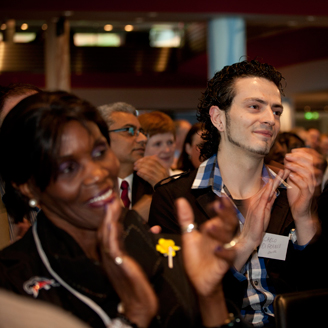
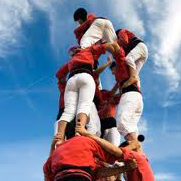
Trust and communication are very important in team work

What becomes clear if you look at these characteristics is that most of them are not the hard skills of industry or management expertise: most are attitudes rather than skills. Successful team players are defined by the way they relate to their colleagues, and the way in which they interact across a broad range of skills bases. In fact 80% of what makes a good team member is determined by these positive attitudes, and only 20% by the specific job skills they possess.

So why does industry spend around 80% of its training budget on developing often short-lived skills which need updating on a regular basis? Read the rest of this entry »

Comments (2) May 05 2010

Posted: under Business Development, Fun at Work, Leadership, Success at Work, Trust.
Tags: , ,


Is team building over 2000 years old?

The theories behind team building could be a much older than originally thought.  In fact Plato may have been  the first ever team building expert!

Plato and Aristotle possibly talking about their recent team building event.

Plato & Aristotle possibly talking about their team building event.

For some years we’ve been saying “teams that play together, work together” and it seems that although team building is thought to be a comparatively new addition to business training Plato, one of the world’s most influential philosophers, had a similar view over 2000 years ago; “You can discover more about a person in an hour of play than in a year of conversation” Plato
 
So we’d encourage you to make time to play with your colleagues this week, take a ball to the park, eat ice cream in the afternoon or play darts at lunchtime – whatever you think would be fun.  We spend most of our waking lives with our colleagues so let’s enjoy it.

Comments (0) Jun 09 2009

Posted: under Fun at Work, Leadership.
Tags: , ,


Can team work save lives?

When individuals know how to work together as a team, it makes all the difference in the world.

The crew worked as a team, not as individuals—and that saved the lives of all 155 people aboard

The crew worked as a team, not as individuals—and that saved the lives of all 155 people aboard

US Airways Flight 1549 was a scheduled commercial passenger flight from New York City to Charlotte, North Carolina, that, on January 15, 2009, ditched in the Hudson River adjacent to Manhattan six minutes after departing from LaGuardia Airport.

While on its initial climb out, the Airbus A320 struck a flock of Canada Geese which resulted in an immediate almost complete loss of thrust from both engines. When the aircrew realised that the plane would be unable to safely reach any airport from its location just northeast of the George Washington Bridge, they turned it southbound and glided over the river, then ditched the airplane virtually intact near the USS Intrepid Museum in midtown Manhattan. After the 155 occupants safely evacuated the partially submerged and sinking plane they were all rescued by nearby watercraft.

Recently after a thorough review of the incident the National Transportation Safety Board official adamantly explained how the crew and passengers survived a near catastrophe in the incredible forced water landing on the Hudson River. “The crew worked as a team, not as individuals—and that saved the lives of all 155 people aboard”.

The message was clear: when individuals know how to work together as a team, it makes all the difference in the world.

Comments (1) Apr 17 2009

Posted: under Leadership, Trust.
Tags:


When teams and leaders collide

Why is it that when some companies and sports teams have a great leader and a brilliant team they still seem to under achieve?

Misaligned leaders and teams can have a very negative effect on success.

Misaligned leaders and teams can have a very negative effect on success, as shown by the England cricket team.

I was recently talking to an executive from a business that has exceptional recruitment.  They are renowned for attracting and recruiting some of the brightest minds in their field.  Their leaders are highly skilled and many have graduated from the best business schools.
 
During our conversation it became apparent that matching great leaders to already successful teams doesn’t always lead to instant success, in fact all too often team performance dropped as a new, highly competent leader was appointed.  The issue here is one of alignment.  Leaders come in different flavours – visionary, strategic, entrepreneurial, consensual, pastoral, motivational, as well as those brought in to turn around a crisis, the re-engineering leader. Read the rest of this entry »

Comments (0) Apr 02 2009

Posted: under Business Development, Leadership, Success at Work.
Tags: , ,


Nature’s greatest teams

According to an article on the BBC website bees and ants are nature’s greatest teams.
The Bees from Hyde Park on a team building event

Apparently unlike some animals who want to get to the centre of large groups to keep themselves safe from predators ants and bees work together as a single unit and are prepared to die for the greater good of their team/colony.

Dr Andy Gardner, from the University of Edinburgh, said: “We often see animals appearing to move in unison, such as bison or fish.  However, what looks like a team effort is in fact each animal jostling to get to the middle of the group to evade predators.  By contrast, an ant nest or a beehive can behave as a united organism in its own right. In a beehive, the workers are happy to help the community, even to die, because the queen carries and passes on their genes.

How far would you go for the success of your team? 

To read the full BBC article click here.

Comments (0) Mar 23 2009

Posted: under Fun at Work.
Tags: , , ,


Teams have competitive advantage

When Southwest Airlines said that it’s important to them that staff have fun at work did anybody believe them or did it just sound like more corporate mission statement jargon?

Our people are our single greatest strength - Gary Kelly

It’s easier to put a mission statement on the wall than it is to put it into action. We know of organisations who have spent months of meetings carefully crafting and re-wording their corporate mission statements, only to find the life sapped from them soon after they’re finished. Or sometimes mission statements work for a while, but then turnover takes a toll and the new people never seem to really get on board.

It’s great to see the video, above, of David, a Southwest Airlines flight attendant, keeping some of their mission statement alive.  He and his colleagues make a great team because they’re committed to the same vision and they support each other.  There is no doubt that team work benefits everybody – customers and colleagues alike.  But sometimes people within an organisation forget they’re part of a team.  One department regards another as a thorn in its side and sometimes colleagues just don’t like each other.

A key factor to success during these hard economic times was summed up by Gary Kelly, CEO of Southwest Airlines, when he said “Our people are our single greatest strength and our most enduring longterm competitive advantage.” Long may it last.

Comments (0) Mar 20 2009

Posted: under Fun at Work, Video Blogs.
Tags: , ,


Does strike action undermine employers trust in staff?

As the industrial dispute spreads over the use of foreign labour at the Lindsey Oil Refinery we should reflect on how this action might affect our own workforce.

Industrial desputes if not managed carefully can erode trust between employees and employers

Industrial desputes if not managed carefully can erode trust between employees and employers

The absence of strikes in recent years has given employers an opportunity to regain their employees trust.  Most employees don’t believe their employer is simply out to exploit them with no regard for them as a person.  Initiatives such as employee engagement surveys, team building days and employee incentives have all helped to strengthen the relationship between the worker and the company.

Action like wildcat strikes can begin to erode the Psychological Contract that is so important.  Especially in an era when many roles rely largely on the individual to choose to serve the businesses best interests, without close supervision.  And of course it can work both ways, the millitant soundbites from striking workers do little to support the diligent work ethic that most of us take to the office every day.

Let’s not forget that just because one employer is in a dispute with its workforce, its not to say that all staff are work shy and all employers are exploitative.

Comments (0) Feb 09 2009

Posted: under Trust.
Tags: , , ,


An organisation’s most valuable resource is its staff

As the recession begins to bite, it is going to be vital for organisations to optimise their resources. And surely any organisation’s most valuable resource is its staff.

Nurturing talent will be a key tool in combating the recession

Nurturing talent will be a key tool in combating the recession

For example, one option is to use this period to promote young talent rather than take on the cost and risk of recruiting externally, a tactic backed up by Dr Emma Parry’s recent report, Nurturing Talent, published by Cranfield School of Management. Another report from Cranfield suggests that initiatives such as Investors
In People can have a positive impact on financial performance.

In these leaner times it is going to be increasingly important to draw a distinction between financial capital and human capital. Whilst there’s little doubt that finances are restricted, now is not the time to constrain your people. In fact this climate of change offers the perfect opportunity to unleash new talent within your organisation, encourage innovation and allow the next generation of leaders to identify themselves. Read the rest of this entry »

Comments (0) Dec 23 2008

Posted: under Business Development, Leadership, Success at Work.
Tags: ,


A little help for Democracy

Would a bit of focused team building help at the House of Commons?
The House of Commons

The House of Commons

The Houses of Parliament have seen some pretty fierce confrontations over the years, and the ongoing debacle over the recent police raid of the offices of Tory MP Damian Green, hasn’t done much to breed a sense of community among MPs.
Accusations of “concealment, duplicity, whitewash and cover-up” have been levied and while some MPs are talking of farce, others see it as a particularly “sorry state of affairs.” The speaker has even had to intervene to remind MPs that they should use “moderate language”.

Comments (0) Dec 08 2008

Posted: under Leadership.
Tags: , ,


Stritcly team building

Darren Bennet from BBC One’s Strictly Come Dancing says to succeed outstanding teams need more than just talent.
Arguably the best Strictly team

Arguably the best Strictly Come Dancing team

Comments (0) Dec 03 2008

Posted: under Fun at Work.
Tags: , ,