01920 822 220
Fresh Tracks

Facilitating Adventurous Conversations

  • 01920 822 220

Posts for tag: Team Work

Page:             

1 2

Making Virtual Teams Work

Since the COVID-19 pandemic, when teams had to adapt and move towards online working and working from home, this type of working has become the norm. Over the past 5 or so years, an increasing number of teams are made up of team members who don’t sit in the same office, town or even continent.

These could be project teams, virtual shared service centres or a field sales force.  There’s no doubt that, like conventional teams, the whole team can be greater than the sum of its parts.  For these remote or virtual teams to be effective, there are some critical points that they must address.

Technology

The ability to see, talk and share information across the team is the primary reason for the growth in virtual team working. It is therefore essential that all members of the team are equally able to make best use of that technology. A Zoom, Teams, or Google conference will only succeed if every participant can use the meeting platform and has a computer with a connection capable of hosting the service. Technical cognisance varies widely in most teams, and most organisations simply accept this fact, offering training but rarely insisting on minimum levels of competence.

In a virtual team, every member must have above-average awareness and confidence in the tools they will be using to communicate and keep in touch. Not just in terms of technical proficiency but also in the appropriate behaviours when using the tools. So email shouldn’t be used when an instant message would be more appropriate; and when team members have agreed to be on a conference call, they must be ‘on’ the call on time, not distracted, doing other things with the speakerphone turned up to the max.

Define the purpose of the business

It sounds obvious that a team should know why the business exists. It’s likely that if asked, each team member could answer the question “Why does this team do what it does?”. The issue is whether the answers would match. Ultimately, the leader must be the one to come up with a definitive purpose, a reason for being. It is then one of the leader’s primary responsibilities to share this with every member of the group in a way that they not only understand but which is also consistent with the behaviours expected of them. The more compelling the better, and don’t be afraid to sprinkle some imagination amongst the practicalities, drawing pictures and using visual language – this should result in a statement of Vision and Purpose: why we exist and where we are going.

Membership

A team member may have many masters. It’s common in virtual teams for members to serve multiple leaders, some functional, some by location. In these instances, it is essential that lines of authority are clear. Ambiguity leads to confusion and increases the likelihood of energy and effort being wasted on the wrong projects at the wrong time. A little time spent agreeing the parameters in which team members will work can save a project from going off the rails further down the line.  Be sure to make time for this in the early life of the team; and going forward, revisit these guidelines regularly, adjusting as necessary.

Strong leadership

Some might argue that virtual team working makes it easy for staff to hide and shirk their responsibilities, and if leadership is weak that may be true. The leader, however, is more exposed in a virtual team than in a conventional work group.  He or she can’t hide behind a busy diary or lock themselves in their office.  Leaders of virtual teams must do just that, lead their team members.  Daily contact is essential, preferably with the conversation not being entirely about task; small talk means a lot to team members that might fear being out of sight, out of mind.

Less frequent weekly face to face or at the least phone conversations about the individual’s work load, progress and development can become part of the routine.  Giving virtual teams something that few office-based teams actually achieve.

Accountability and Feedback

In an environment where team members work side by side, frustrations and differences of opinion can be worked out on the spot, whereas an ill-thought-through comment made remotely can easily fester and lead to resentment. For any team to function effectively, there should be a spirit of openness and accountability within the team. Where a culture of feedback exists, anyone can coach, encourage or critique another team member’s behaviour or work, but few groups seem to achieve this. In teams where leaders encourage openness and provide training in the techniques required to give and receive feedback safely, their teams excel.

Social interaction

Something that office-based teams often take for granted is the social interaction that comes from working alongside a colleague. The value of being able to share the troubles or successes of the day with a nearby colleague is hard to quantify, but there’s no doubt that many a long day has been shortened by the opportunity to vent about a difficult customer or laugh about the boss’s dress sense.

Importantly, it’s from this social interaction that relationships can develop, ultimately leading to a greater sense of trust which in turn leads to better decisions being taken more quickly, reduced bureaucracy and greater productivity.

It’s important for virtual teams to physically spend time together away from work than those teams where colleagues’ paths will cross as part of their working day.  At least three times a year, the virtual team should take a day or two to get to know each other, learn together, review and celebrate recent events, and adapt and agree on working practices going forward.

Decisions and conflict resolution

If a team is going to make a difference they will need to make some choices together. As with any team the danger of the opinions of the few dominating the debate is amplified when people feel unable to express their views. Teams need to agree what decisions can be taken by the leader alone, what can be decided by a few and what issues should have input from everyone. Having agreed the ‘what’ , just as important is the ‘how’. If the team have scheduled face to face meetings, these provide a great opportunity to deal with the top priority issues in an open forum, with more routine decisions either being taken by appointed individuals or democratically using email or online voting technology.

Benefits of virtual teams

When Starbucks founder, Howard Schultz talked about his coffee shops being a ‘third place’ between home and work, I doubt even he predicted the impact he would have on where we work. We have seen offices shrink over the past few years, as people now travel less to work, and can access their work and each other from wherever they happen to be.

The challenge this presents organisations is to develop leaders that can manage beyond arm’s length.

Fresh Tracks can run team days and activities for your workforce to help develop the team when you do meet up. Get in touch if you would like to find out more.

The History of Team Building

The theories behind team building could be much older than originally thought.  In fact, Plato may have been the first ever team building expert!

Plato and Aristotle possibly talking about their recent team building event.

Plato & Aristotle possibly talking about their team building event.

Is team building over 2000 years old?

For some years we’ve been saying “teams that play together, work together” and it seems that although team building is thought to be a comparatively new addition to business training Plato, one of the world’s most influential philosophers, had a similar view over 2000 years ago; “You can discover more about a person in an hour of play than in a year of conversation” Plato

So we’d encourage you to make time to play with your colleagues this week, take a ball to the park, eat ice cream in the afternoon or play darts at lunchtime – whatever you think would be fun.  We spend most of our waking lives with our colleagues so let’s enjoy it.

Can teamwork save lives?

When individuals know how to work together as a team, it makes all the difference in the world. Here, we take a closer look at an example where teamwork saved lives.

Example: US Airways Flight 1549
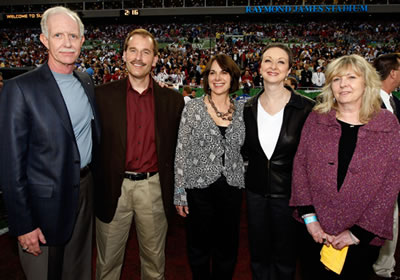
The crew worked as a team, not as individuals—and that saved the lives of all 155 people aboard

The crew worked as a team, not as individuals—and that saved the lives of all 155 people aboard

US Airways Flight 1549 was a scheduled commercial passenger flight from New York City to Charlotte, North Carolina, that, on January 15, 2009, ditched in the Hudson River adjacent to Manhattan six minutes after departing from LaGuardia Airport.

While on its initial climb out, the Airbus A320 struck a flock of Canada Geese which resulted in an immediate almost complete loss of thrust from both engines. When the aircrew realised that the plane would be unable to safely reach any airport from its location just northeast of the George Washington Bridge, they turned it southbound and glided over the river, then ditched the airplane virtually intact near the USS Intrepid Museum in midtown Manhattan. After the 155 occupants safely evacuated the partially submerged and sinking plane they were all rescued by nearby watercraft.

The Outcome of the flight crew working together

Recently after a thorough review of the incident the National Transportation Safety Board official adamantly explained how the crew and passengers survived a near catastrophe in the incredible forced water landing on the Hudson River. “The crew worked as a team, not as individuals—and that saved the lives of all 155 people aboard”.

The message was clear: when individuals know how to work together as a team, it makes all the difference in the world.

How to spot a team player in an interview

The interviewing process can be stressful for both recruiting managers and candidates, after all, recruiting managers are trying to dissect every aspect of a candidate’s experience and personality during a short conversation. 

When interviewing for a role, hiring managers will have in mind the particular skills and qualities that they are looking for in an ideal candidate. Some of these can be more specific but there are a number of more broad and regularly desirable skills that crop up on a hiring managers ‘must-have’ list. Time and time again, being a ‘team player’ will be a significantly important trait that is sought after.

Breaking Bread – our newest team building programme

For thousands of years, the head of the table has broken bread to signal the commencement of a meal. Celebration, or feasting, is an important practice for high performing teams. Our latest activity explores the similarities between building teams and making bread.

breaking bread team building
With the popularity of TV shows like ‘The Great British Bake Off’, alongside concerns over additives in commercial loaves, the art of baking bread is back in vogue. The smell of freshly baked bread is captivating and many say the process of kneading therapeutic. Making bread is a simple process but one that requires patience and control.

How team building exercises can help relieve stress

Work related stress is a common complaint. The latest figures from the Labour Force Survey (LFS) show that the total number of cases of stress in 2011/12 was 428, 000 (40%) out of a total of 1, 073, 000 for all work-related illnesses. Team building exercises can help combat some of the reasons and symptoms of stress in the workplace.

team building exercies to releive stress

A picture of stress in today’s workplace

Whilst a little stress can push people to achieve – too much stress can have damaging and far reaching effects not only on the individual suffering but for the company and other team members.

Why trusting your team drives results

For the ultimate exercise in developing trust, take your team out on the blindfolded 4×4 challenge for an experience that will never be forgotten.

Learn how to trust your colleagues!

Learn how to trust your colleagues!

Trust is something that is usually earned rather than gifted and without trust within the workings of a business, communication can become flawed, direction can be lost and ultimately the company can suffer as a result. Our blindfolded 4×4 challenge develops trust amongst colleagues. And it’s a real laugh too!…

The Team Machine in action!

The Team Machine is an fun team building event that requires participants to co-operate with other teams to achieve a common goal.

Each team is given a set of building materials to create a moving sculpture. The plans are muddled requiring sharing of data before building can commence. Components must be assembled in just the right way for the individual mechanisms to work. Later the teams must work together to find the correct sequence of mechanisms, so that, once launched each element will trigger the next in a chain reaction building to an explosive finale!

Have a look at The Team Machine in action at a recent Fresh Tracks team building event.

Page:             

1 2

Share this blog

subscribe to our RSS Feeds

Subscribe

Be among the first to get our blog posts direct to your email inbox or delivered via your RSS feed reader

Event finder question mark

Can't find what you want?

Use our Event Finder to find an event to suit your specific needs

Choose category

Browse the archives