


01920 822 220
Fresh Tracks

Facilitating Adventurous Conversations

  • 01920 822 220

Ten reasons why meetings fail

Posts from: May 2009

Ten reasons why meetings fail

Meetings can take up a large portion of anyone’s working day and for many of us, demands on time in the office are already high. So in an ideal world every meeting should count, with specific objectives and results making the time invested worthwhile. 

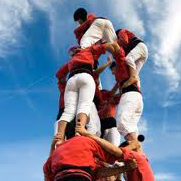
Allowing conflict to get out of control = chaos

Allowing conflict to get out of control = chaos

All too often though, meetings – even during and afterwards – are perceived as a waste of time by those invited. This can usually be attributed to a lack of understanding about what the meeting was for. To avoid the sense that it was all worthless, here is a list of ten reasons why meetings can fail for you to use as a checklist when planning your next meeting:

1.      No agenda = no purpose
2.      No advance communication = surprising behaviours/responses
3.      Not encouraging participation = no interaction
4.      No time management = cost to organisation – time is money
5.      Allowing conflict to get out of control = chaos
6.      Not reaching consensus = waste of time and company resources
7.      Allowing sub meetings = no focus or direction
8.      Not controlling difficult behaviour = everyone becoming difficult
9.      Not summarising actions = misunderstanding of next steps
10.  Not motivational = attendees leave feeling flat and despondent

This list is based on an article written by Nuggets of Learning and Development.

Sick and Tired

Take a peek around your office, who’s got bags under their eyes?  A recent poll revealed that lack of sleep is the biggest health concern for 42% of the population, with another 34% experiencing low-level general fatigue.

Have you ever fallen asleep at work?

Have you ever fallen asleep at work?

Our relationship to tiredness is paradoxical, a source of shame, indicating our inability to cope; but also a badge of honour, signifying the importance of our work, for some its become an ‘affordable’ status symbol.

In reality tiredness leads to irritability, either bad decision making or worse, procrastination, poor concentration and reduced creativity.  Fatigue also reduces our immunity leading very quickly to ill health.
Whilst short term absences have reduced in the past year as people look to preserve their jobs, more than a third of employers claim that absences for long-term sickness increased last year.  A recent survey of nearly 700 employers found that 36 per cent of those asked said long-term sickness, where an employee had been off for more than a month, had risen between 2007 and 2008.  Long-term sickness is believed to be the most damaging area of absence. It cost the economy £5.3bn in 2007, according to the CBI….

The Power of a Leader

Can one person change the world?  Hilter certainly tried and thankfully failed, Stalin did his best and Obama certainly seems to be changing ‘our world’ if not all of the world.

2 lessons in leadership from Obama

Two lessons in leadership from Obama

Since September most media have been feeding us bad news stories, particularly regarding the economy.  In the midst of this, the election of the first black US President led to some optimistic reporting and has continued to do so.  Every time Obama stands in front of the cameras he seems to bring hope, not just to his nation but to the whole of the developed world.
 
He seems to understand that when he says swine flu cases are diminishing and the economy is stabilising the world believes him, confidence grows and with confidence can come recovery….

Share this blog

subscribe to our RSS Feeds

Subscribe

Be among the first to get our blog posts direct to your email inbox or delivered via your RSS feed reader

Event finder question mark

Can't find what you want?

Use our Event Finder to find an event to suit your specific needs

Choose category

Browse the archives