

01920 822 220
Fresh Tracks

Facilitating Adventurous Conversations

  • 01920 822 220

Page:             

1 14 15 16 17

Is team building over 2000 years old?

The theories behind team building could be a much older than originally thought.  In fact Plato may have been  the first ever team building expert!

Plato and Aristotle possibly talking about their recent team building event.

Plato & Aristotle possibly talking about their team building event.

For some years we’ve been saying “teams that play together, work together” and it seems that although team building is thought to be a comparatively new addition to business training Plato, one of the world’s most influential philosophers, had a similar view over 2000 years ago; “You can discover more about a person in an hour of play than in a year of conversation” Plato
 
So we’d encourage you to make time to play with your colleagues this week, take a ball to the park, eat ice cream in the afternoon or play darts at lunchtime – whatever you think would be fun.  We spend most of our waking lives with our colleagues so let’s enjoy it.

Ten reasons why meetings fail

Meetings can take up a large portion of anyone’s working day and for many of us, demands on time in the office are already high. So in an ideal world every meeting should count, with specific objectives and results making the time invested worthwhile. 

Allowing conflict to get out of control = chaos

Allowing conflict to get out of control = chaos

All too often though, meetings – even during and afterwards – are perceived as a waste of time by those invited. This can usually be attributed to a lack of understanding about what the meeting was for. To avoid the sense that it was all worthless, here is a list of ten reasons why meetings can fail for you to use as a checklist when planning your next meeting:

1.      No agenda = no purpose
2.      No advance communication = surprising behaviours/responses
3.      Not encouraging participation = no interaction
4.      No time management = cost to organisation – time is money
5.      Allowing conflict to get out of control = chaos
6.      Not reaching consensus = waste of time and company resources
7.      Allowing sub meetings = no focus or direction
8.      Not controlling difficult behaviour = everyone becoming difficult
9.      Not summarising actions = misunderstanding of next steps
10.  Not motivational = attendees leave feeling flat and despondent

This list is based on an article written by Nuggets of Learning and Development.

Sick and Tired

Take a peek around your office, who’s got bags under their eyes?  A recent poll revealed that lack of sleep is the biggest health concern for 42% of the population, with another 34% experiencing low-level general fatigue.

Have you ever fallen asleep at work?

Have you ever fallen asleep at work?

Our relationship to tiredness is paradoxical, a source of shame, indicating our inability to cope; but also a badge of honour, signifying the importance of our work, for some its become an ‘affordable’ status symbol.

In reality tiredness leads to irritability, either bad decision making or worse, procrastination, poor concentration and reduced creativity.  Fatigue also reduces our immunity leading very quickly to ill health.
Whilst short term absences have reduced in the past year as people look to preserve their jobs, more than a third of employers claim that absences for long-term sickness increased last year.  A recent survey of nearly 700 employers found that 36 per cent of those asked said long-term sickness, where an employee had been off for more than a month, had risen between 2007 and 2008.  Long-term sickness is believed to be the most damaging area of absence. It cost the economy £5.3bn in 2007, according to the CBI….

The Power of a Leader

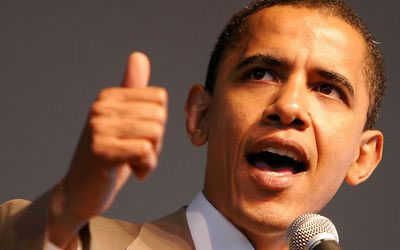
Can one person change the world?  Hilter certainly tried and thankfully failed, Stalin did his best and Obama certainly seems to be changing ‘our world’ if not all of the world.

2 lessons in leadership from Obama

Two lessons in leadership from Obama

Since September most media have been feeding us bad news stories, particularly regarding the economy.  In the midst of this, the election of the first black US President led to some optimistic reporting and has continued to do so.  Every time Obama stands in front of the cameras he seems to bring hope, not just to his nation but to the whole of the developed world.
 
He seems to understand that when he says swine flu cases are diminishing and the economy is stabilising the world believes him, confidence grows and with confidence can come recovery….

Can team work save lives?

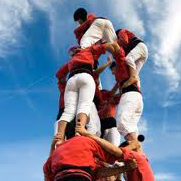
When individuals know how to work together as a team, it makes all the difference in the world.

The crew worked as a team, not as individuals—and that saved the lives of all 155 people aboard

The crew worked as a team, not as individuals—and that saved the lives of all 155 people aboard

US Airways Flight 1549 was a scheduled commercial passenger flight from New York City to Charlotte, North Carolina, that, on January 15, 2009, ditched in the Hudson River adjacent to Manhattan six minutes after departing from LaGuardia Airport.

While on its initial climb out, the Airbus A320 struck a flock of Canada Geese which resulted in an immediate almost complete loss of thrust from both engines. When the aircrew realised that the plane would be unable to safely reach any airport from its location just northeast of the George Washington Bridge, they turned it southbound and glided over the river, then ditched the airplane virtually intact near the USS Intrepid Museum in midtown Manhattan. After the 155 occupants safely evacuated the partially submerged and sinking plane they were all rescued by nearby watercraft.

Recently after a thorough review of the incident the National Transportation Safety Board official adamantly explained how the crew and passengers survived a near catastrophe in the incredible forced water landing on the Hudson River. “The crew worked as a team, not as individuals—and that saved the lives of all 155 people aboard”.

The message was clear: when individuals know how to work together as a team, it makes all the difference in the world.

Don’t forget motivation

What do organisations need to do to be able to bounce back once this economically gloomy period is over?

Check text

Is your team motivated to grow?

A discussion on the radio this morning was about whether the first green shoots of recovery from recession were appearing. The discussion was inconclusive and extended the green metaphor to suggest that we could also expect a lot of weeds, but highlighted once again the fact that no-one really knows how or when things are going to pick up.

The thing is that once things do get start to turn around, recovery is probably going to take as many by surprise as did the speed of the downturn last year, and a lot of organisations may be caught on the hop. Having cut back, streamlined, pruned, and cut down again to make do with fewer resources, for many it will be tough to keep up once things start to speed up again if the organisation hasn’t kept its remaining staff motivated and its systems up to date….

When teams and leaders collide

Why is it that when some companies and sports teams have a great leader and a brilliant team they still seem to under achieve?

Misaligned leaders and teams can have a very negative effect on success.

Misaligned leaders and teams can have a very negative effect on success, as shown by the England cricket team.

I was recently talking to an executive from a business that has exceptional recruitment.  They are renowned for attracting and recruiting some of the brightest minds in their field.  Their leaders are highly skilled and many have graduated from the best business schools.
 
During our conversation it became apparent that matching great leaders to already successful teams doesn’t always lead to instant success, in fact all too often team performance dropped as a new, highly competent leader was appointed.  The issue here is one of alignment.  Leaders come in different flavours – visionary, strategic, entrepreneurial, consensual, pastoral, motivational, as well as those brought in to turn around a crisis, the re-engineering leader….

Is Team Building a Luxury?

An article recently published by Harvard Management Publishing looked at team building in economically uncertain times and concluded that “it’s in times like these that team building activities are most needed.”

Team building for tough times

Pat Olsen, in the Harvard Management Update, writes that: “Chances are, anyone who has worked for a corporation has suffered through at least one irrelevant or embarrassing team building exercise. But team building activities aren’t limited to trust falls and paint ball. Used wisely, they can improve morale, foster cohesiveness, increase motivation, and focus a team on a problem. The best ones also give employees insight about their organization.”

Read the Harvard Management Update article in full.

Does “team building” work?

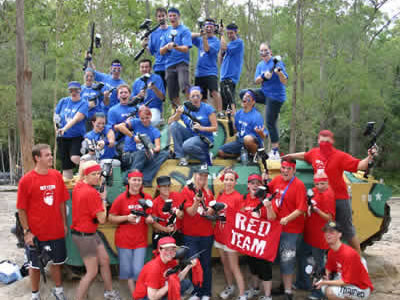
A recent article in The Wall Street Journal* suggested that while team-building exercises may be fun (for some people), they really don’t do much to solve workplace issues.

Team building doesn't just mean getting the team together

Team building doesn't just mean getting the team together

For example, sales executive Paul Garvey claimed that the most insightful team-building exercise he ever participated in involved paintball, which in no way helped to resolve the relationship issues back at the office. Speaking of his former company, he said that colleagues would poach each other’s deals while their manager played favourites. Someone decided a paintball exercise would help. It didn’t, and merely reinforced the divisions and favouritism already present.

Another instance of completely inappropriate team building involved the team from a contractor on an Apollo space project. They were asked by their HR department to participate in a role-playing exercise where they had to return safely from the North Pole. Their day-to-day job involved helping astronauts return safely from space. What additional insights into teamwork did HR think this role play could teach them?…

What motivates your staff?

Corporate values could be a determining factor for staff as they choose to join, stay or leave your organisation.

Does charity begin at work?

Does charity begin at work?

Friday was Comic Relief Day and this year it seemed to bring relief in a number of ways.  The record total raised of £57m will undoubtedly help those in need in Africa and closer to home.  This year, perhaps more than in previous, years the opportunity to laugh and give seemed  also to bring some relief to those watching and giving.

Two examples stand out in my memory of generous giving.  One was the anonymous donor of an incredible £6m; the other the little girl who gave up a whole month’s pocket money.  I wonder if now that it’s no longer ‘cool’ to splash out on flat screen TVs and designer gear the public at large is discovering that a greater sense of satisfaction comes from giving rather than getting. 

If my hunch is correct, then what does this mean for employers?  …

Page:             

1 14 15 16 17

Share this blog

subscribe to our RSS Feeds

Subscribe

Be among the first to get our blog posts direct to your email inbox or delivered via your RSS feed reader

Event finder question mark

Can't find what you want?

Use our Event Finder to find an event to suit your specific needs

Choose category

Browse the archives